Posted On: September 10, 2025 | By: adminadmin
A Traveller’s Guide to Experiencing Bhutan’s Tshechu Festival with Amedewa Tours and Trek
Bhutan, the Land of the Thunder Dragon, is a country where tradition and spirituality are deeply woven into everyday life. Among its many cultural treasures, Bhutan’s Tshechu Festival stands out as one of the most vibrant and spiritually uplifting experiences for both locals and visitors. A journey to Bhutan is incomplete without witnessing this grand celebration of faith, culture, and community. It truly reflects the essence of the major festivals in Bhutan celebrated across the country.
This guide is designed to help travelers understand the significance of the Tshechu festival in Bhutan, what to expect, and how to make the most of this extraordinary cultural experience.
What Is Bhutan’s Tshechu Festival?
The word “Tshechu” translates to “tenth day” in the Bhutanese language. Every year, on the tenth day of a lunar month—which frequently falls on auspicious Buddhist dates—Bhutan celebrates the Tshechu Festival, a religious event. The Tshechus in Thimphu, Paro, and Punakha are the most well-known. These iconic celebrations have contributed to Tshechu becoming one of the most recognised festivals in Bhutan.
The festival honors Guru Rinpoche (Padmasambhava), the revered Buddhist saint who introduced Buddhism to Bhutan in the 8th century. Through sacred mask dances, rituals, and prayers, devotees commemorate his life, teachings, and miraculous deeds.
For visitors, the Tshechu festival is not only a religious event but also a mesmerizing cultural spectacle that offers an unparalleled window into Bhutanese heritage.
Why Is Bhutan’s Tshechu Festival So Important?
The Tshechu festival in Bhutan is more than just a celebration—it is an essential part of Bhutanese identity.
- Spiritual Significance: Attending the Tshechu is believed to wash away sins and bring blessings for prosperity and happiness.
- Cultural Preservation: The mask dances and rituals performed during the festival have been preserved for centuries, ensuring Bhutan’s traditions remain alive.
- Social Gathering: During Tshechus, towns and families get together in their best clothes, strengthening their cultural ties.
- Tourist Magnet: For travelers, it is one of the best opportunities to witness Bhutan’s living culture up close.
Where and When Does the Tshechu Festival Take Place?
The Tshechu festival in Bhutan is celebrated in different districts throughout the year, each carrying its own charm and traditions.
- Tshechu: One of the largest festivals, held in the capital city every autumn.
- Paro Tshechu: Famous for the unveiling of the giant thangka (religious scroll painting) known as the Thongdrol.
- Punakha Tshechu: Set against the stunning backdrop of the Punakha Dzong, this festival is full of grandeur.
- Regional Tshechus: Smaller districts host their own tshechus, offering more intimate experiences for travelers.
Duration and Timing
The lunar calendar determines the precise dates of each tshechu, which usually lasts three to four days. Most festivals are held in spring (March–April) or autumn (September–October), when Bhutan enjoys pleasant weather and clear skies. This is also when most other cultural festivals in Bhutan are celebrated, attracting thousands of visitors.
Highlights of Bhutan’s Tshechu Festival
-
Sacred Mask Dances (Cham Dances)
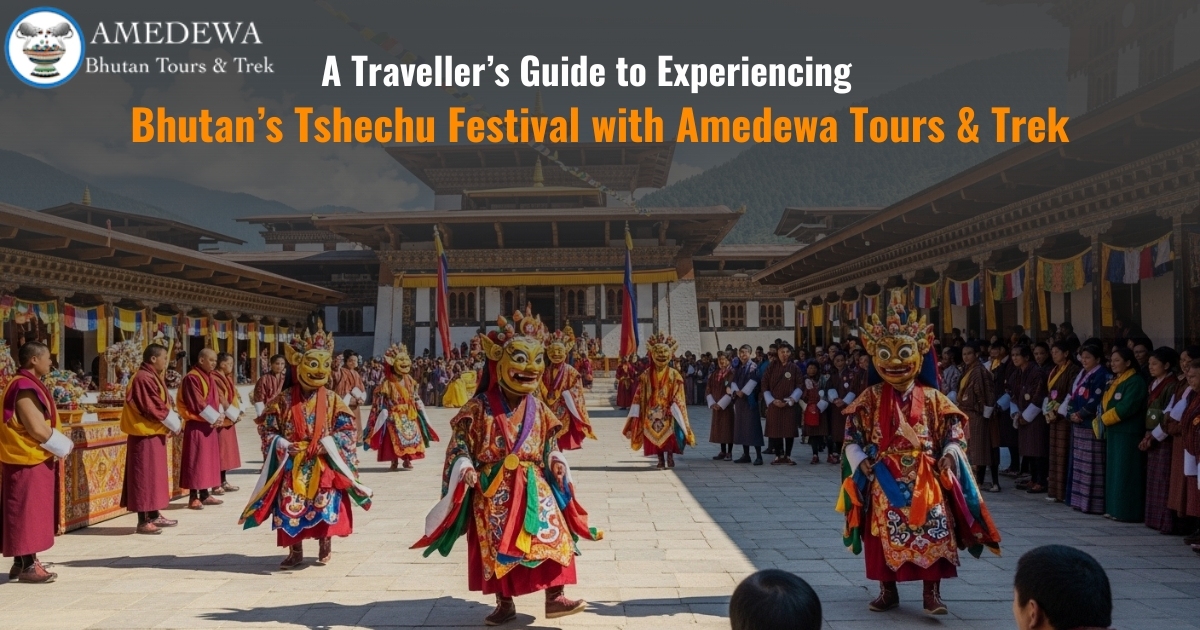
The cham dances, which are performed by laypeople and monks, are the most engaging feature of the Tshechu festival. Wearing ornate masks and costumes, performers reenact spiritual tales, legends, and moral lessons. Each dance carries deep symbolic meaning, often portraying the triumph of good over evil.
-
The Grand Thongdrol Unveiling
The presentation of the enormous Thongdrol before dawn is the centerpiece of celebrations like Paro Tshechu. It is believed that a single glance at this sacred scroll cleanses one of all sins.
-
Colorful Bhutanese Attire
Locals dress in their most vibrant ghos (for men) and kiras (for women). For travelers, this is a unique chance to admire Bhutan’s traditional dress culture and perhaps even try it themselves.
-
Religious Blessings
High lamas and spiritual leaders conduct rituals, offering blessings to the attendees. Receiving these blessings is considered auspicious and spiritually empowering.
-
Community Celebration
From laughter-filled gatherings to shared meals, the festival fosters a joyous community atmosphere. For visitors, this provides an authentic insight into Bhutanese hospitality and togetherness.
What Makes Bhutan’s Tshechu Festival Unique for Travelers?
Travelers to Bhutan often find the Tshechu festival to be an unforgettable cultural immersion. Here’s why:
- Photographer’s Paradise: With swirling colors, sacred masks, and ornate costumes, tshechus offer endless opportunities for stunning photography.
- Blend of Spirituality and Festivity: Few cultural events worldwide combine solemn rituals with joyful festivities as seamlessly as the tshechu.
- Interaction with Locals: The festival allows visitors to mingle with Bhutanese families, deepening cultural understanding.
- Rare Opportunity: Tshechus are unique to Bhutan and deeply rooted in its Buddhist traditions, offering experiences not found elsewhere.
Tips for Travelers Attending Bhutan’s Tshechu Festival
i) Plan in Advance: Since tshechus attract both locals and tourists, book flights and accommodations early.
ii) Dress Modestly: Out of respect for local customs, wear modest and conservative clothing. Bringing a light jacket is advised in autumn.
iii) Arrive Early: The best performances happen in the morning, and early arrival secures a good viewing spot.
iv) Respect Rituals: Avoid obstructing performers or monks, and follow photography rules carefully.
v) Engage with Locals: Don’t hesitate to strike up conversations—Bhutanese people are warm and welcoming.
vi) Combine with Sightseeing: Pair your tshechu visit with nearby attractions such as monasteries, dzongs, and hiking trails.
Combining Tshechu with Bhutan Sightseeing
Attending a Tshechu festival in Bhutan is often just one highlight of a larger journey. Here are some experiences you can combine with your festival trip:
- Thimphu: Visit the Tashichho Dzong, the Folk Heritage Museum, and hike to Buddha Dordenma.
- Paro: Explore the iconic Tiger’s Nest Monastery, Paro Dzong, and National Museum.
- Punakha: Marvel at Punakha Dzong, Bhutan’s most photogenic fortress.
- Countryside Adventures: Try trekking, river rafting, or simply immerse yourself in the serene Bhutanese landscapes.
Why You Shouldn’t Miss Bhutan’s Tshechu Festival?
The Tshechu festival in Bhutan is more than just a cultural show—it is an immersive journey into Bhutan’s heart and soul. From the sacred mask dances to the joyous community gatherings, every moment is infused with spiritual meaning and cultural richness.
It is a unique chance for tourists to see a centuries-old custom that is still practiced in contemporary Bhutan. Experience Bhutan’s Tshechu festival to make lifelong memories, regardless of your interests in culture, spirituality, or adventure. For many travellers, attending the Tshechu also sparks curiosity to explore other festivals in Bhutan during future visits.
Conclusion
Attending Bhutan’s Tshechu Festival is one of the most authentic ways to experience the kingdom’s vibrant heritage, spirituality, and community life. From the sacred cham dances to the warmth of Bhutanese hospitality, it’s an event that blends cultural preservation with joyous celebration.
If you’re planning your journey, ensure that your festival experience is seamless and enriching with the guidance of experts. Amedewa Tours and Trek specializes in curating cultural and spiritual journeys in Bhutan, helping travelers witness the magic of Tshechu festivals while exploring the country’s breathtaking landscapes. With their expertise, you’ll enjoy not only the grandeur of the festival but also the hidden gems of Bhutan.