Posted On: September 11, 2025 | By: adminadmin
Thimphu Drubchen Festival: Bhutan’s Ritual of Protection with Amedewa Tours and Trek
Bhutan, the Land of the Thunder Dragon, is famous for its vibrant festivals, deeply rooted spirituality, and age-old traditions that preserve its cultural identity. Among its many sacred observances, the Thimphu Drubchen Festival holds a unique place. Unlike the grand, colorful, and community-oriented Tshechu festivals, the Drubchen is a solemn, spiritually charged event performed for the protection of the nation and its people.
Held in the capital city, Thimphu, at the majestic Tashichho Dzong, the Thimphu Drubchen Festival in Bhutan is not merely a celebration—it is a tantric ritual of profound religious significance. This blog will walk you through its origins, rituals, cultural importance, and how visitors can respectfully witness this extraordinary event.
What Is the Thimphu Drubchen Festival?
The Thimphu Drubchen Festival is a sacred Buddhist ritual dedicated to the protective deity Pelden Lhamo, Bhutan’s fierce guardian goddess. Unlike the widely attended Tshechu that follows it, the Drubchen is primarily performed by monks and is meant to invoke divine protection for Bhutan against disease, disasters, and external threats.
Drubchens are characterized by intense tantric practices, including sacred dances, mantra chanting, and ritual prayers. For Bhutanese people, the festival is a reminder of the nation’s spiritual resilience and its deep ties to Buddhist traditions.
The Origins of the Thimphu Drubchen Festival
The history of the Thimphu Drubchen Festival in Bhutan dates back to the 18th century. It was instituted by Zhabdrung Jigme Dorji, a revered reincarnation of the Zhabdrung Rinpoche—the spiritual leader who unified Bhutan.
According to Bhutanese accounts, Zhabdrung Jigme Dorji had a divine vision in which Pelden Lhamo instructed him to perform specific rituals to safeguard the nation from spiritual and physical threats. Acting upon this vision, he introduced the Thimphu Drubchen, making it a tantric festival of protection.
Since then, the Drubchen has been performed annually as a shield against misfortune and as a way of consecrating the capital city, its people, and the Buddhist Dharma.
Rituals and Activities During Thimphu Drubchen
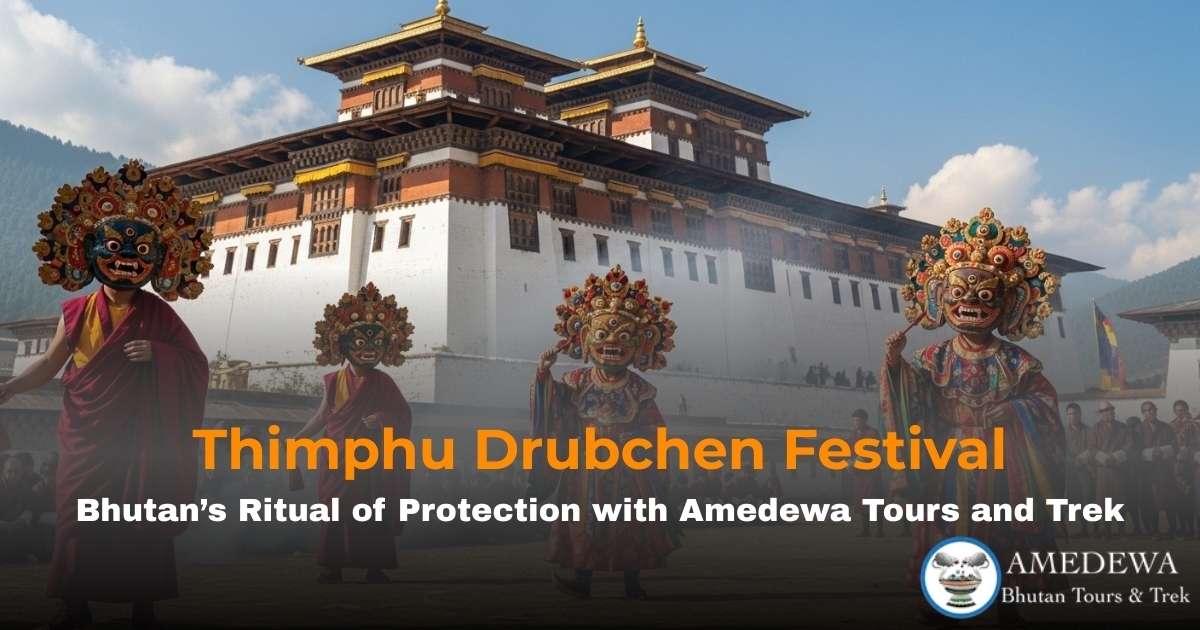
The Thimphu Drubchen Festival spans several days and unfolds at the Tashichho Dzong, a fortress that also houses the throne room and offices of Bhutan’s king. While not as accessible to the public as the Tshechu, the Drubchen offers a glimpse into Bhutan’s deepest spiritual practices.
-
Sacred Mask Dances (Cham)
The monks’ Cham dances are the most remarkable feature of the Drubchen. These masked dances are not for entertainment but are ritual acts of protection. Each mask, costume, and movement symbolizes wrathful deities defeating negative forces and evil spirits.
The Cham of the Drubchen, which are thought to transmit heavenly energy and protect Bhutan, are performed with a meditative intent, in contrast to the more dramatic dances of Tshechu celebrations.
-
Tantric Prayers and Chanting
Throughout the festival, monks engage in rigorous tantric rituals, including days-long chanting, mandala offerings, and mantra recitations. The vibrations of these chants are believed to cleanse the spiritual environment, bless the city, and create an aura of protection.
-
Invocation of Pelden Lhamo
The invocation of Bhutan’s guardian deity, Pelden Lhamo, lies at the heart of the celebration. Through chants, offerings, and rituals, her presence is summoned to ward off misfortunes and defend the kingdom. The unwavering defense of the country, its inhabitants, and its spiritual traditions is symbolized by her fiery vitality.
The Spiritual Significance of the Festival
The Thimphu Drubchen Festival in Bhutan stands apart because it is not primarily about celebration but protection. It reflects Bhutan’s reliance on its spiritual heritage to safeguard its people and values.
The festival is celebrated to:
- Preserve Bhutan’s tantric Buddhist traditions.
- Protect the capital city, Thimphu, from misfortune.
- Invoke divine blessings for peace and prosperity.
- Accumulate merit and purify negative karma for all who participate or observe.
For Bhutanese Buddhists, being part of the Drubchen—whether through chanting, lighting butter lamps, or simply observing in reverence—is considered an act of devotion that brings spiritual merit.
When and Where Is It Celebrated?
- Location: Tashichho Dzong, Thimphu, Bhutan
- Timing: Annually, a few days before the Thimphu Tshechu (September or early October, depending on the lunar calendar)
- Duration: Typically 3–4 days
Because the Drubchen is more solemn and sacred, it is less open to tourists compared to Tshechu festivals. However, respectful travelers with genuine spiritual curiosity can witness parts of the rituals.
How Visitors Can Experience the Thimphu Drubchen Festival Respectfully?
Travelers fortunate enough to attend the Thimphu Drubchen Festival in Bhutan should do so with cultural sensitivity and respect for local traditions. Here are some guidelines:
- Dress Modestly: Wearing long sleeves, formal attire, or even traditional Bhutanese dress (kira for women, gho for men) is encouraged.
- Maintain Silence: Avoid loud conversations, unnecessary movements, or disruptive behavior during rituals.
- Photography Etiquette: Always ask before taking photos, and avoid using flash during dances and rituals.
- Hire a Local Guide: A knowledgeable guide can explain the meaning behind the rituals, enhancing your experience.
- Combined with Tshechu: Since the Drubchen leads into the Thimphu Tshechu, attending both provides a complete cultural immersion.
Pro Tip: Drubchen for the Soul, Tshechu for the Senses
For travelers, it’s important to understand the difference between these two festivals.
- Thimphu Drubchen Festival: A spiritual, meditative ritual of protection, emphasizing devotion, chanting, and sacred dances.
- Thimphu Tshechu Festival: A lively, colorful event with vibrant masked dances, public participation, and cultural celebration.
Together, they form the spiritual yin and yang of Bhutan’s festival calendar, offering both solemnity and joy.
Why the Thimphu Drubchen Festival Matters Today?
In an era of rapid globalization, festivals like the Drubchen highlight Bhutan’s commitment to preserving its ancient spiritual traditions. While the world rushes forward, Bhutan continues to anchor itself in rituals that prioritize collective wellbeing, harmony, and protection.
The Thimphu Drubchen Festival in Bhutan is not simply about history or religion—it’s about continuity, cultural identity, and safeguarding a nation’s soul. For those who experience it, the festival provides a rare opportunity to connect with spirituality at its purest form.
Final Thoughts
The Thimphu Drubchen Festival is more than a religious event—it is Bhutan’s sacred ritual of protection, embodying the nation’s spiritual heritage and devotion to its guardian deities. It offers visitors a profound glimpse into Bhutanese tantric practices, far beyond the colorful spectacles of Tshechu festivals.If you’re planning to witness this extraordinary festival, consider pairing it with the Thimphu Tshechu for a complete cultural journey. For the most authentic and enriching experience, let Amedewa Tours and Trek guide you. With cultural sensitivity, expert local guides, and personalized itineraries, Amedewa ensures your journey into Bhutan’s spiritual heart is as transformative as the festival itself.