Posted On: October 10, 2025 | By: adminadmin
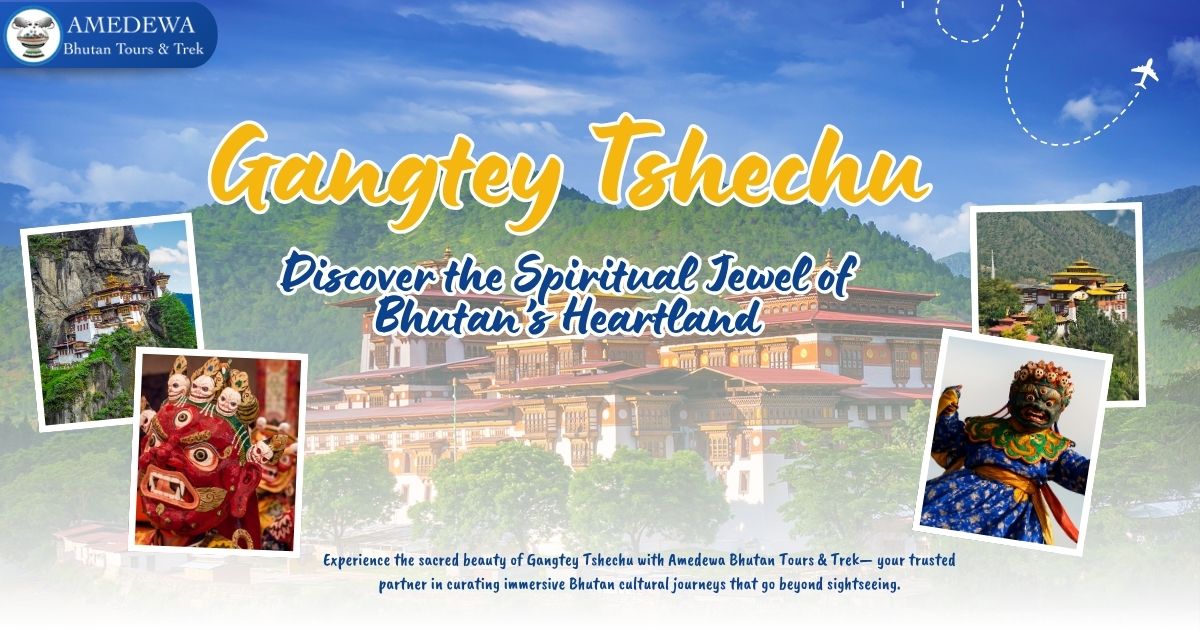
Gangtey Tshechu: Discover the Spiritual Jewel of Bhutan’s Heartland
Tucked away in the tranquil Phobjikha Valley, surrounded by sweeping glacial plains and pristine forests, the Gangtey Tshechu stands as one of Bhutan’s most spiritually captivating festivals. This sacred celebration, held annually at the majestic Gangtey Monastery, honors Guru Rinpoche—revered as the “Second Buddha”—whose teachings brought Vajrayana Buddhism to Bhutan.
The Gangtey Tshechu festival in Bhutan is more than just a religious event. It’s a powerful convergence of faith, culture, and community, set against one of the most breathtaking landscapes in the Himalayan kingdom. Visitors from across the world gather here to witness the colorful cham (mask) dances, spiritual blessings, and deep-rooted traditions that define Bhutan’s identity. For those looking to explore Bhutan beyond its scenic beauty, Gangtey Tshechu offers a window into the nation’s spiritual soul.
The Essence of Gangtey Tshechu
The word Tshechu translates to “tenth day,” marking the tenth day of a month in the Bhutanese lunar calendar that is dedicated to Guru Padmasambhava. The Gangtey Tshechu festival in Bhutan is celebrated over three to five days and is a time for spiritual reflection, social gathering, and cultural preservation.
Monks and laypeople perform sacred mask dances known as cham, believed to purify sins, bring blessings, and protect the land from evil spirits. For Bhutanese locals, attending a Tshechu is an act of devotion and a way to accumulate spiritual merit. For visitors, it’s a once-in-a-lifetime chance to witness living Buddhist traditions in their purest form.
Why Is Gangtey Tshechu Celebrated?
The Bhutan Gangtey Tshechu festival is dedicated to Guru Rinpoche (Guru Padmasambhava), who introduced Buddhism to Bhutan in the 8th century. The festival honors his life, teachings, and the many miraculous deeds he performed to spread enlightenment across the Himalayas.
Each sacred dance tells a story—of good triumphing over evil, of wisdom dispelling ignorance, and of compassion guiding all beings toward liberation. The dances are performed not for entertainment, but as powerful meditative rituals meant to bless the land, the people, and all who witness them.
What makes Gangtey Tshechu truly unique is its setting in the Phobjikha Valley, a place of both spiritual and ecological importance. The valley is home to the endangered black-necked cranes that migrate from Tibet each winter. These birds are revered as divine messengers, and their arrival coincides with the festival, symbolizing purity, balance, and the connection between nature and spirituality.
The Setting: Gangtey Monastery and Phobjikha Valley
Perched on a ridge overlooking the vast, bowl-shaped Phobjikha Valley, Gangtey Monastery (Gangtey Goemba) is a masterpiece of Bhutanese monastic architecture. Established in the 17th century, it serves as the main seat of the Nyingma school of Buddhism in western Bhutan.
During the festival, the monastery becomes a vibrant stage of devotion—monks don colorful silk robes and ornate masks, while the air resonates with the sounds of cymbals, long horns, and rhythmic chants. The surrounding valley, carpeted with golden meadows and misty forests, amplifies the sacred atmosphere, making Gangtey Tshechu a spiritual experience unlike any other.
As the black-necked cranes circle above, locals see it as a sign of blessing—a divine reminder that harmony between nature and faith sustains life in Bhutan’s heartland.
Highlights of the Gangtey Tshechu Festival
The Gangtey Tshechu festival in Bhutan unfolds through a series of mesmerizing events, each carrying deep symbolic meaning.
1. Cham Dances (Mask Dances)
The cham dances are the centerpiece of the festival. Monks and local men perform intricate, slow-motion movements to rhythmic music, embodying protective deities and enlightened beings. Some of the most iconic dances include:
- Dance of the Eight Manifestations of Guru Rinpoche – Depicting the Guru’s power to subdue negativity.
- Dance of the Terrifying Deities – A ritual to dispel evil and cleanse the surroundings.
- Dance of the Lords of the Cremation Grounds – Representing the impermanence of life and the victory of wisdom.
Each performance is both a spiritual offering and a visual feast, deeply rooted in ancient Buddhist symbolism.
2. Black-Necked Crane Dance
Unique to Gangtey, this dance celebrates the arrival of the black-necked cranes to the valley. Monks imitate the bird’s elegant movements to honor its spiritual significance. This fusion of nature and religion is a rare expression of Bhutan’s eco-spiritual harmony.
3. Community Blessings and the Thongdrol
On the final day, a giant thangka (scroll painting) of Guru Rinpoche known as the Thongdrol is unveiled. Locals believe that a single glance at it purifies all sins. Villagers, dressed in traditional attire, gather to receive blessings from the lamas and offer prayers for health, prosperity, and peace.
Why Should You Experience Gangtey Tshechu?
The Bhutan Gangtey Tshechu festival isn’t just an event—it’s a transformative journey that connects you to the heart of Bhutanese spirituality and culture. Here’s why every traveler should experience it:
- Authentic Cultural Immersion: Unlike larger festivals in Paro or Thimphu, Gangtey Tshechu offers a more intimate, less-crowded atmosphere, giving travelers genuine access to local traditions.
- Spiritual Connection: The festival embodies Bhutan’s living Buddhist heritage. Observing the rituals offers a rare chance for inner reflection and peace.
- Harmony with Nature: The setting in Phobjikha Valley, home to black-necked cranes, highlights Bhutan’s unique blend of spiritual reverence and environmental consciousness.
- Cultural Photography: With its colorful attire, sacred dances, and serene landscapes, the festival is a photographer’s dream.
Travel Tips for Visitors
If you’re planning to explore Bhutan during Gangtey Tshechu, here are a few helpful tips:
- Best Time to Visit: The festival usually takes place in early to mid-October, depending on the lunar calendar.
- Where to Stay: The Phobjikha Valley offers cozy homestays, eco-lodges, and boutique resorts that allow visitors to enjoy local hospitality and scenic views.
- What to Pack: Warm clothes, comfortable shoes, a camera, and a sense of reverence for local customs.
- Travel Requirements: All international visitors must book their Bhutan trip through licensed tour operators as part of the country’s sustainable tourism policy.
Gangtey Tshechu: A Living Expression of Faith
The Gangtey Tshechu festival in Bhutan is more than just a performance—it’s a living narrative of devotion, nature, and tradition. The sacred cham dances, the unfurling of the Thongdrol, and the black-necked crane’s graceful flight all weave a story of coexistence and spiritual renewal.
This festival captures the essence of Bhutanese life, where religion, art, and nature flow seamlessly together. Whether you’re a pilgrim seeking spiritual depth or a traveler wanting to explore Bhutan beyond the surface, the Gangtey Tshechu offers an unforgettable window into the kingdom’s heart.
So, when you find yourself in Bhutan’s tranquil Phobjikha Valley, let the chants, dances, and serene landscapes of Gangtey guide you into a world where faith meets nature and the spirit soars freely.Experience the sacred beauty of Gangtey Tshechu with Amedewa Bhutan Tours & Trek— your trusted partner in curating immersive Bhutan cultural journeys that go beyond sightseeing.